

The Seven Most Important KPIS for a Profitable Boutique Fitness Studio

Studio owners are great at the top line. Ask how many members you have, how many leads came in last month, or what you sold in January, and you'll answer before I finish. Ask about net profit, and I usually get crickets. (I've been there. In my first studio, I knew my class counts by heart and my P&L by rumor.)
Quick gut check. Which studio would you rather own?
Studio A: $500,000 in revenue, $450,000 in expenses
Studio B: $200,000 in revenue, $50,000 in expenses
Studio B keeps three times as much money.
If the finance side feels fuzzy, that's normal. Most coaching programs focus on marketing and sales, and most of us didn't open a studio because we love spreadsheets. This article won't replace a good bookkeeper. It will give you the seven numbers to check every week, so you always know where your business stands. Treat each one as a puzzle piece, because no single number tells the whole story.
The most important KPIs for a boutique fitness studio are gross income, net profit, expenses, break-even point, profit margin, member retention rate, lead-to-client conversion rate, and average client value. Tracking these seven numbers consistently gives you a much clearer picture of your studio's financial health than revenue or membership numbers alone.

Gross Income
Everything that came in. Higher is better because it gives you room to spend and still profit. One warning: don't treat your booking software as the final word. Fitness software is known for reports that don't match reality. Pull revenue from your accounting software or merchant reports, because the bank balance is what counts.
2. Net Income/ Profit
What's left after you pay the bills (revenue minus expenses). You can grow it two ways: bring in more money or send out less. Most owners only work the first lever. Work both every month.
3. Expenses and Your Break-Even Point
When I ask clients for their break-even, I'm really asking what it costs to run the studio each month. That tells us how many memberships you need to cover expenses with recurring revenue alone. Most owners carry a break-even number from years ago that's nowhere near today's reality.
Go through your income statement line by line every month. You'll get an accurate number, and you'll catch fraud, chargebacks, and billing mistakes fast.
This is also where your budget lives. If you don't have one, set monthly targets for your regular variable expenses: advertising, bank fees, dues and subscriptions, debt repayment, events, insurance, payroll, studio supplies, training and professional fees, and travel and meals. A budget is how you pay yourself what your time is worth instead of sending it all to Amazon.

4. Profit Margin
The percentage of every sales dollar you keep.
Formula: (Net Profit ÷ Revenue) × 100
Studio B above runs a 75% margin. Studio A runs a 10% margin.
Benchmarks for small studios are hard to come by. The closest industry number comes from the Health & Fitness Association, where reporting operators posted a median EBITDA margin of 23.6% in 2024. EBITDA excludes interest, taxes, depreciation, and amortization, so your true net margin will land lower. That data also draws on 175 companies representing more than 17,000 fitness facilities, so it leans toward bigger operators. Use it as a directional marker.

5. Member Retention Rate?
What percentage of your members stay?
Monthly formula: (Members at start of month − Cancellations) ÷ Members at start of month
If you start with 100 members and 3 cancel, your monthly retention is 97%. Looks great, right? Now do the annual math: 97% a month compounds to about 69% for the year. For comparison, HFA's latest benchmark found median annual retention at 66 percent, with top-performing clubs exceeding 75 percent. Where do you land?
6.Lead-to-Client Conversion Rate
What percentage of intro clients buy a membership? If you work with me, you know I ask about this every single meeting. Studios that don't track it usually sit below 10%. My clients average around 75%. Out of every ten leads, that's 7.5 new members instead of one.
Improving your sales process is the fastest way to grow revenue, and it starts with knowing your current number.
7. Average Client Value (ACV)
How much the average member spends with you each month.
Formula: Membership Revenue ÷ Total Members
For context, average monthly fitness facility dues in the United States rose 9% in 2023 to $65 per month across all facility types. Boutique runs much higher: according to Mariana Tek's 2025/2026 pricing guidance, unlimited monthly boutique memberships generally range from $110 to $360, depending on the studio and location. Your ACV will depend on your market, modality, and client, so focus on watching it climb as you refine your pricing. Use it to:
Build accurate financial projections
Figure out how many clients each class needs to be profitable
Calculate how many members cover your monthly operating costs

Make It a Habit
Put a recurring appointment on your calendar to review these numbers. Silence your phone, pull out a checklist, and give it your full attention. If you do your own books, pick a day each week or month to reconcile. If you have a bookkeeper, make sure you get a reconciled P&L every month and actually sit down with it.
It's the same thing you tell new clients: starting is the hard part, and the results come from sticking with it.
Ready to make this your most profitable year? Watch the replay of the Limitless Numbers to Know Workshop. You'll walk away with plug-and-play reports that do the heavy lifting. Just add your numbers and show up for your check-in.
Here's to your financial success.
FROM ONE STUDIO OWNER TO ANOTHER: MEET NIKI, FOUNDER OF LIMITLESS
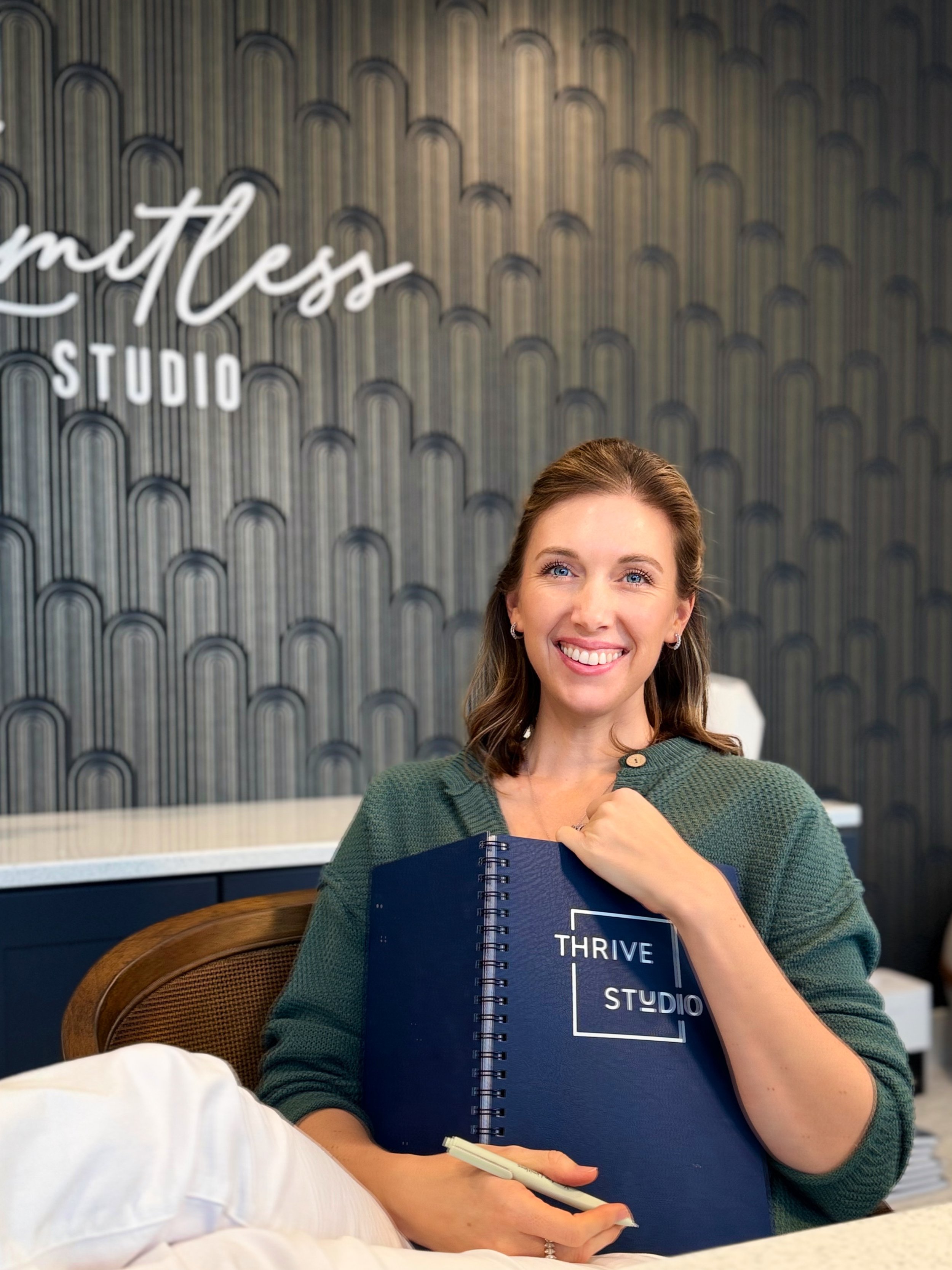
Hi, I'm Niki Riga, founder of Limitless Studio and a business coach specializing in boutique fitness studios. I've spent over a decade in the industry, and now I help you fix the stuff that's quietly costing you money: your intro offers, your pricing, your sales conversations, using actual buyer psychology instead of whatever everyone else in the industry is copying from each other.
I've got a Master's in Small Business, and I've spent years helping studio owners like you build their dream businesses. If you want that kind of strategy in your corner, join the waitlist, and I'll reach out personally when a spot opens up.