
How to Run a Fitness Studio Open House That Attracts New Members
One of my very first articles when I started Limitless Studio was about open houses, because it's such a strong tool for capturing new client interest. The problem is we're in a vastly different landscape now than when I wrote that article, so we can't keep leaning on the same three words every studio in town still uses: free class weekend. It worked beautifully, but that was before there was a boutique studio in nearly every storefront running the same tactics. There are roughly 46,000 boutique fitness studios in the U.S.right now, and boutique is the fastest-growing corner of the entire fitness industry, up 15-20% a year.
Free as the selling point is no longer special. It's not that free classes stopped getting bodies in a room; they still do. It's that "free" isn't a big enough reason anymore when six other studios in your zip code are running the same ChatGPT campaign. When you look around an open house, half the room is current members and the other half are bargain-hunters who have been to every free class in town with no intention of buying a thing. We need to rethink the messaging to attract new clients in a saturated market. Your future client has scrolled past three identical posts before she's finished her coffee, but the event itself didn't stop working. The thing that used to make it feel special did.
January and September are Both Effective With Different Messaging
I still love a January open house. That infectious "New Year, New You" energy is real (although please don’t call it that), and resolution season brings people out who are actively looking for something. The catch is that everyone else's studio is fighting for attention in the loudest, most expensive lead market of the whole year.
September is quieter. Routines are resetting, kids are back in school, and clients who fell off over the summer are already thinking about getting back into something- they're just not being marketed to yet, because most studios are still asleep until Labor Day. A well-timed message travels further when nobody else is shouting.
You don't have to pick one. Run it twice a year if it makes sense for your studio; just don't run the identical event both times and call it a strategy. January can lean into fresh-start energy. September can lean into routine and reset, coming back to yourself now that summer chaos is finally over- especially if your studio is full of parents. It’s the same mechanics underneath with a different promise on top, matched to what's actually happening in your clients’ lives that month.
Think Outside the Free Classes Weekend
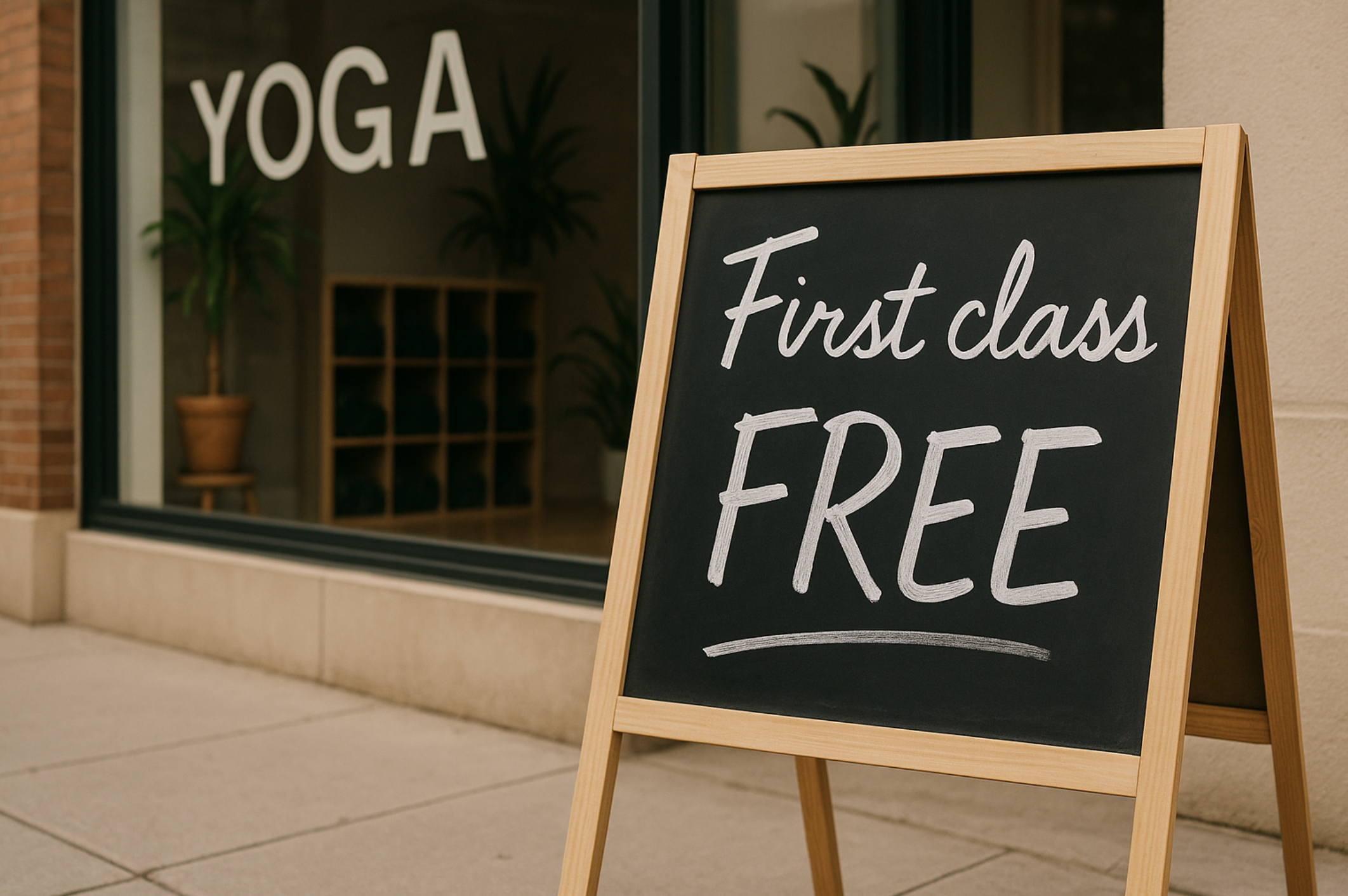
If your event is selling "come try our classes for free," you're selling the same thing as every other studio running one this month. Nobody's short on free workout options- or any workout options, really. What they're actually hunting for is a studio that feels like it gets them.
Here are a few angles I’ve recommended to my private clients lately- but remember your studio's personality when choosing your theme:
Back to You - for the client whose whole identity got absorbed by kids, work, or caretaking this summer. Less "get your life together," and more "you're allowed an hour."
The Comeback - my favorite for double-duty targeting: new leads and lapsed members in the same event.
Reclaim Your Routine - the aspirational angle. Strong for busy parents and professionals trying to rebuild structure.
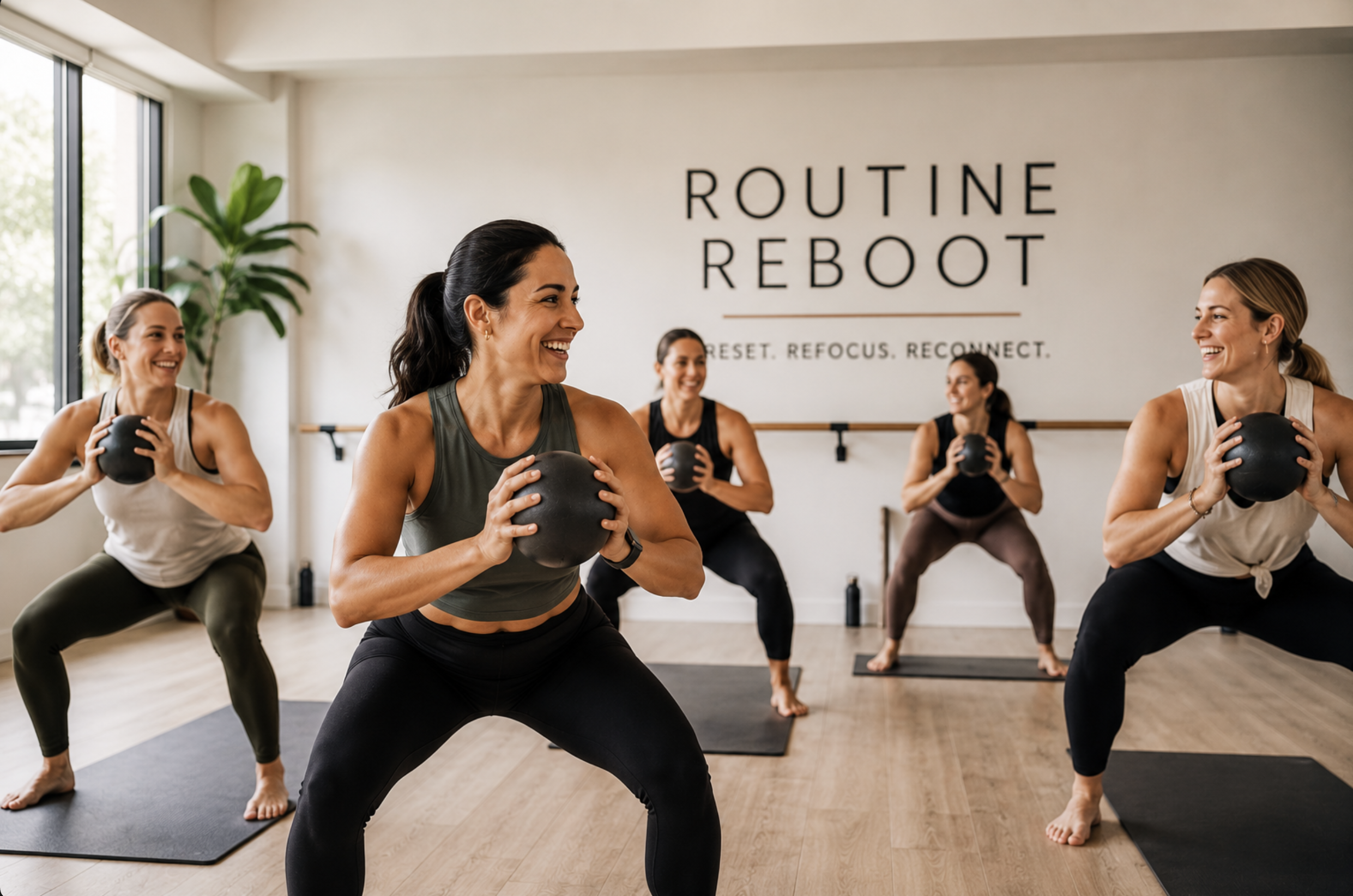
The Routine Reboot - same territory, a little more modern and campaign-y. This is my current favorite, but it also speaks my language as a Type A busy working mom who clings to routine like a lifeboat.
Your Fall Restart - "you don't need to start over, you just need somewhere to restart." I could write ad copy off that line alone.
Same mechanics underneath any of these. Completely different promise on top. Pick one audience and one promise, and make every single asset- landing page, email, text, social, signage, staff brief- reinforce that same idea before you launch. Don't try to be everything to everyone in one weekend. I promise it waters everything down.
Don’t Ask Prospects for a Whole Afternoon
I am an elder millennial, which means I'm boutique fitness's bread and butter. Millennials hold steady at 49% of all boutique fitness attendance, the single largest generation in the room, and 74% of us actively patronize boutique studios over a big-box gym. You know what I'm short on right now? Time. A long open house with vendors, activities, and full-length classes competes with everything else on a busy woman's calendar. Your prospects likely don’t have a free afternoon. They have stolen minutes.
So build a 45-minute Preview instead, with a real 30-minute class sitting in the middle of it. Long enough that she actually gets a feel for the room. Short enough that it fits into the pocket of time she genuinely has.
And think about when you host your event. It doesn’t have to be the standard Saturday/Sunday; that may not be right for your target client. If your ideal clients are stay-at-home moms, maybe a “drop-off reset” on a weekday morning right after school drop-off. If you have busy professionals, consider an early evening like a “Sip and Sweat.” Weekend slots are often claimed by family life for a lot of clients- so don't make that your only option.
Here's How I'd Do It:
Welcome your prospect by name at the desk. Try to avoid the doctor’s office experience of filling out her waiver standing up at a counter. Instead, greet her, hand her a lemon water or tea, and guide her to a bench to fill out forms if you have one. Ask the Limitless 3 C2C questions and listen to the answers.
A fantastic 30-minute class, taught by your best instructor- the one who remembers names, teaches to the room instead of just the regulars, and can drop assumptive language without it ever feeling salesy. "When you're back next week." "When you hit your fifth class." Small phrases that quietly assume she's staying, instead of just hoping she will.
A few minutes of built-in downtime after. Don’t rush straight into a sales pitch. A moment that's just for them- sitting, chatting with each other or a staff member, catching her breath, visiting a coffee bar. This makes the hour feel like she was taken care of instead of sold to.
Bring-a-friend, baked into the invite itself, not tacked on as an afterthought. Something like: "Bring the friend you keep saying you'll work out with." Give them a two-for-one intro rate if they book together.

Skip the Pricing Menu
Skip the laminated sheet of seven package options- I know you have one; we've all had one. Choice paralysis is your enemy, and selling memberships after one visit is harder than ever. Instead, create one clear intro price, presented once. Rather than trying to entice prospects with a free month, aim to remove the decision entirely so she doesn't leave to "think about it" (aka never come back), which, let's be honest, is where most intro offers actually die.
Close by booking her next visit for her instead of asking her to do it herself online: "Is this a good time for you? We have this timeslot on Tuesday. Do you want to try (insert modality) or stick with the same style?" At my studio, we have a rule that intro clients shouldn’t leave without a follow-up class booked because it keeps them on their trajectory towards membership.
Or Go Bigger: Charge For a Week
Here's my new favorite (and boldest version) of "stop selling free": actually charge for it. Turn your Routine Reboot into a paid week of unlimited classes instead of one hour on the house. Something small, $29 to $49 for the week, does what free never could: it filters out the bargain-hunters who show up for anything with the word "free" on it and never intend to buy, and it tells her from the first click that this isn't the same giveaway every other studio is running.
Hand her a roadmap punch card the day she signs up, with the first class already punched for her. A full week gives her five or six real chances to fall in love with the studio instead of one high-pressure hour, and it gives your staff five or six real conversations instead of just one. You know I love the rule of seven.
Tie the last punch to the actual decision point, a set amount off her first month if she joins before the week's up. Same mechanics as the punch card, just rebranded for the reset week.
Fix the No-Show Problem Before it Happens
Here's a stat that changed how I think about the week leading up to an event: roughly half of people who RSVP to a free event don't show up. Half! If you're not communicating before the event, you're not solving for that; you're just hoping around it.
Build this in:
A personal text the night before or that morning that assumes she's coming, not one that reminds her the event exists. "Hi Jane, this is {your name} from {studio name}. We can't wait to meet you tomorrow. Bring your mat if you have one, and I’ll see you at the desk when you come in."
Prep Your Team
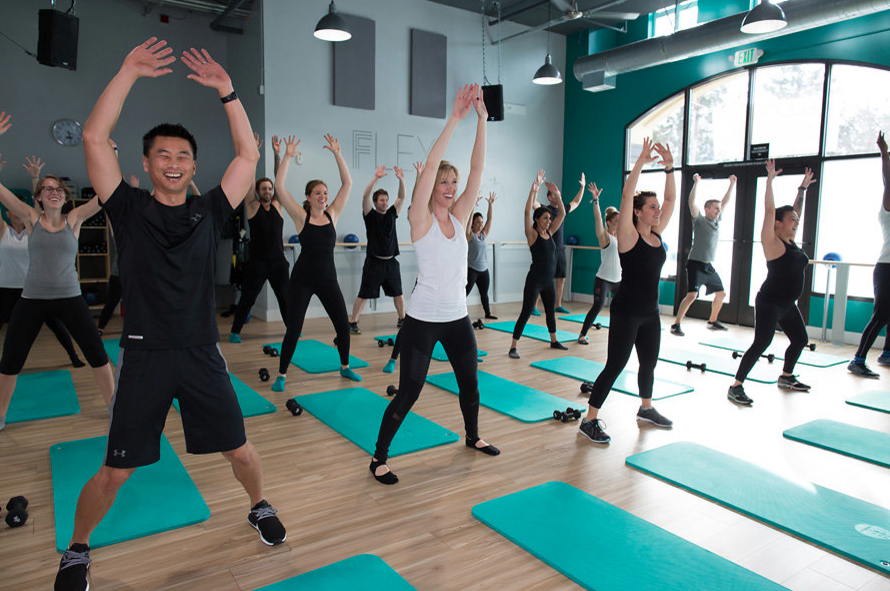
Brief your front desk and instructors on who greets the new client the second she walks in, who gives her the tour, and who’s in charge of helping her put down roots in the studio by meeting other clients and staff. A confident, intentional handoff does more to lower a first-timer's anxiety than anything on your schedule.
The Bottom Line
The mechanics of a good open house haven't changed all that much: pick a date, design the experience, prime attendance, staff it well, sell with intention. What's changed is what actually gets prospects (who go on to buy packages) to show up in the first place. Nobody's impressed by free anymore. They're moved by a promise that sounds like it was written for them specifically, not AI slop blasted out to the whole zip code.
Build your event around the promise, not the discount, so the discount becomes the closer instead of the whole pitch.
PS. Please, for the love of all things. DO NOT use a ChatGPT flyer for it. In a recent survey, 65% of people said they are uncomfortable with AI advertising, and many said they would not attend an event using an AI flyer. So don’t risk it; plus, they all look the same. Canva for the win.
FROM ONE STUDIO OWNER TO ANOTHER: MEET NIKI, FOUNDER OF LIMITLESS
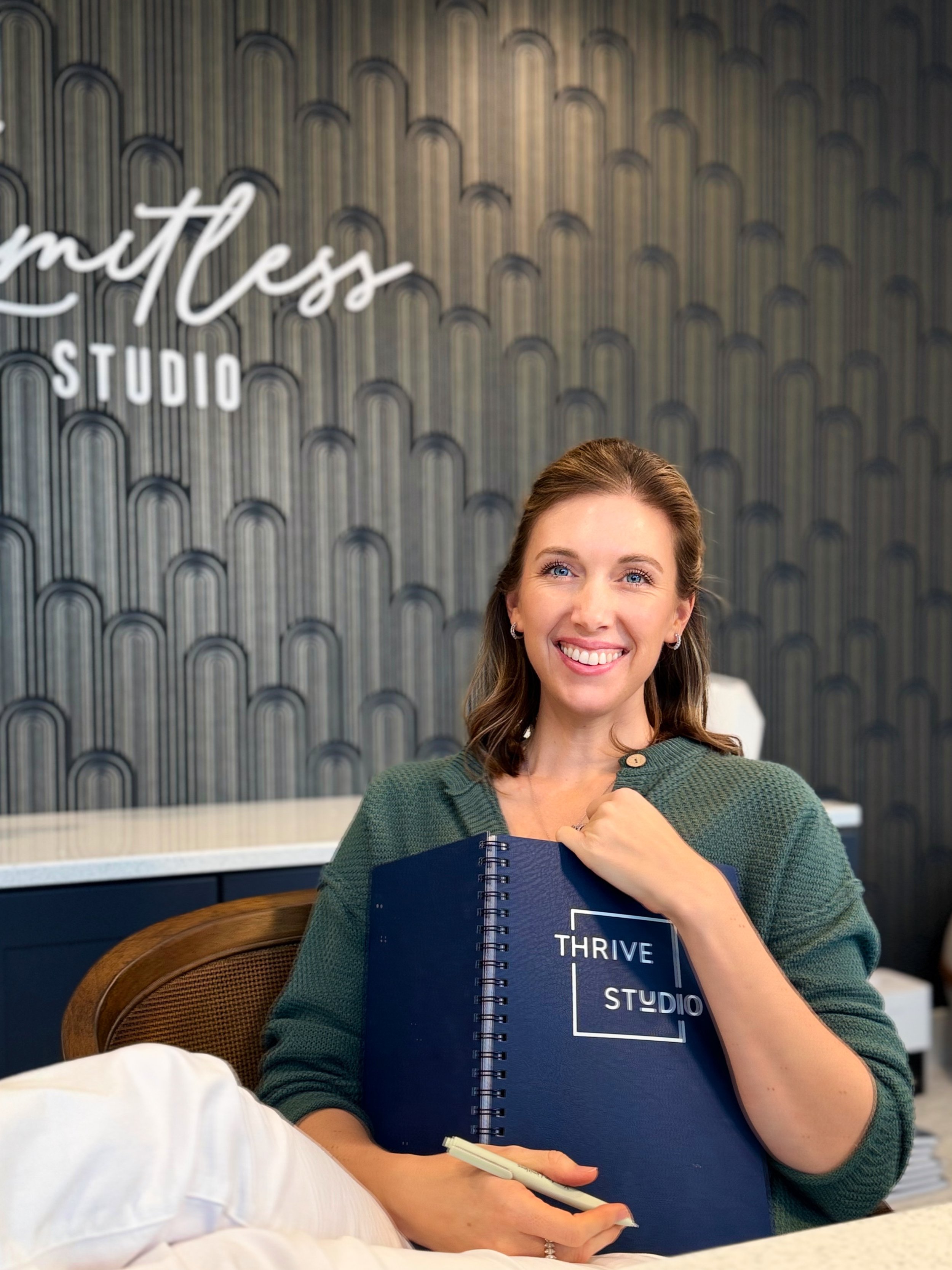
Hi, I'm Niki Riga, founder of Limitless Studio and a business coach specializing in boutique fitness studios. I've spent over a decade in the industry, and now I help you fix the stuff that's quietly costing you money: your intro offers, your pricing, your sales conversations, using actual buyer psychology instead of whatever everyone else in the industry is copying from each other.
I've got a Master's in Small Business, and I've spent years helping studio owners like you build their dream businesses. If you want that kind of strategy in your corner, join the waitlist, and I'll reach out personally when a spot opens up.