

How to use a Simple Punch Card to Double Your Fitness Studio's Sales
A year after I opened my studio, I found myself stuck in freeway traffic, driving across town for a sandwich. The reason I was stuck behind a Prius going 10 under the speed limit instead of just popping into the sandwich shop next door? Because I had a silly punch card, and I was only one punch away from a free sandwich. Yes, I probably spent more on gas, but that free sandwich was mine, dang it.
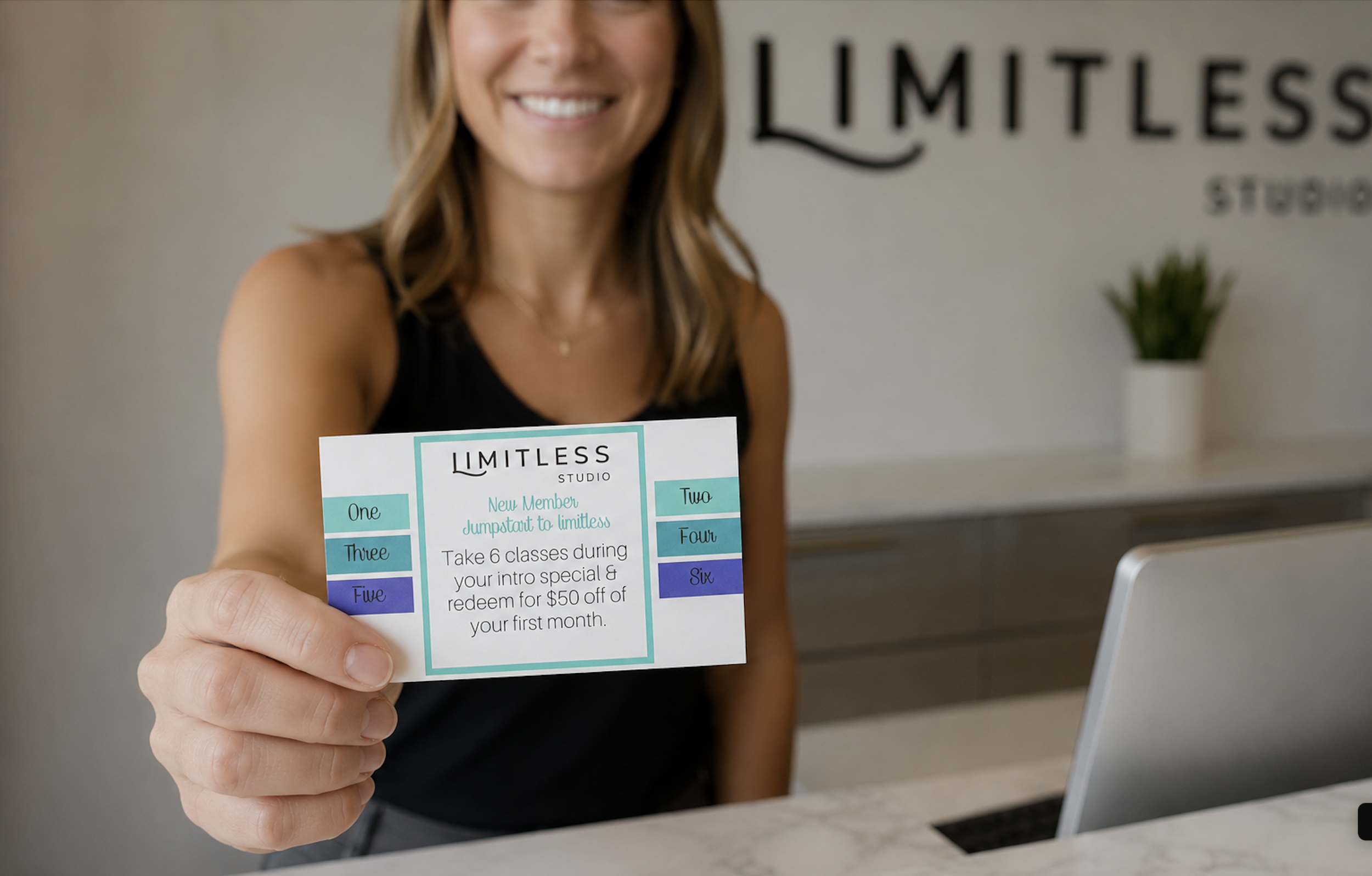
Then it hit me. What if I used the same idea in my studio? So, I stole the idea from a sandwich shop. You’ve probably picked up a coffee loyalty card before. It’s not fancy, it’s just a business card with boxes on it. I turned that into the Limitless Jumpstart card: take 8 classes during your intro offer and get $50 off your first month's membership. (Grab my template HERE)
I didn't expect that much from it. It was a paper card, not a new sales script. But once I started handing it out, my intro-to-member conversion jumped higher than anything else I'd tried.
Turns out I wasn't just lucky. There's actual behavioral research explaining why a punch card outperforms a lot of the fancier stuff we spend our time on, and once you see it, you'll want one in your studio.
So What's Actually Happening Here?
There's a well-documented concept called the goal-gradient effect, and it's exactly what it sounds like: people push harder the closer they get to a finish line. Researchers proved this back in 2006 with a coffee shop study. One group got a 10-stamp card starting from zero. Another group got a 12-stamp card with 2 stamps already filled in. Both groups needed exactly 10 more purchases to earn their free coffee.
The pre-stamped group finished faster, and they bought more coffee the closer they got to the reward. Same amount of work, completely different behavior, just because the finish line felt closer.
Sound familiar? That's your client on class 5 of the Jumpstart card. She's not booking because she loves your sales pitch. She's booking because she can see the end, and now she feels like she earned that discount- just like me driving across town for an unnoteworthy sandwich.

The Real Secret: Give Them a Head Start
Here's the part that you might inadvertently miss when you build your own version, and it's a big part of what actually moves the conversion needle.
Researchers ran a similar study at a car wash. One card needed 8 stamps, starting blank. A second card needed 10 stamps, but it arrived with 2 already filled in. Same 8 washes required either way.
The results weren't close. 34% of people with the head-start card completed it. Only 19% of the blank-card group did. Nearly double, just from the illusion of already being partway there.
This is why numbering your card (like One through Six) and punching the first class in front of the new client on day one instead of handing them a plain (empty) checkbox card isn't just a cute design. It's doing psychological work. People don't want to walk away from progress, even progress you handed them for free.
Why This Beats Almost Everything Else In Your Funnel
I know what you're thinking: cool story, but does it actually matter for revenue? Yup. The broader loyalty data backs this up:
Loyalty program members are 70% more likely to keep shopping with a brand, and they spend 12 to 18% more than people who aren't enrolled.
Converting someone who's already engaged succeeds about 70% of the time. Converting a cold lead succeeds 5-20% of the time.
A 5% bump in retention can drive a 25-95% increase in profit, because keeping someone is dramatically cheaper than acquiring someone new.
Your intro offer is the window where all of this matters most. A new lead hasn't yet built a habit with you. Habit is what turns "trying you out" into "member." A punch card gives her a visible, physical reason to keep showing up during the only stretch where her decision is still actually up for grabs.
The Bonus You're Not Even Trying For
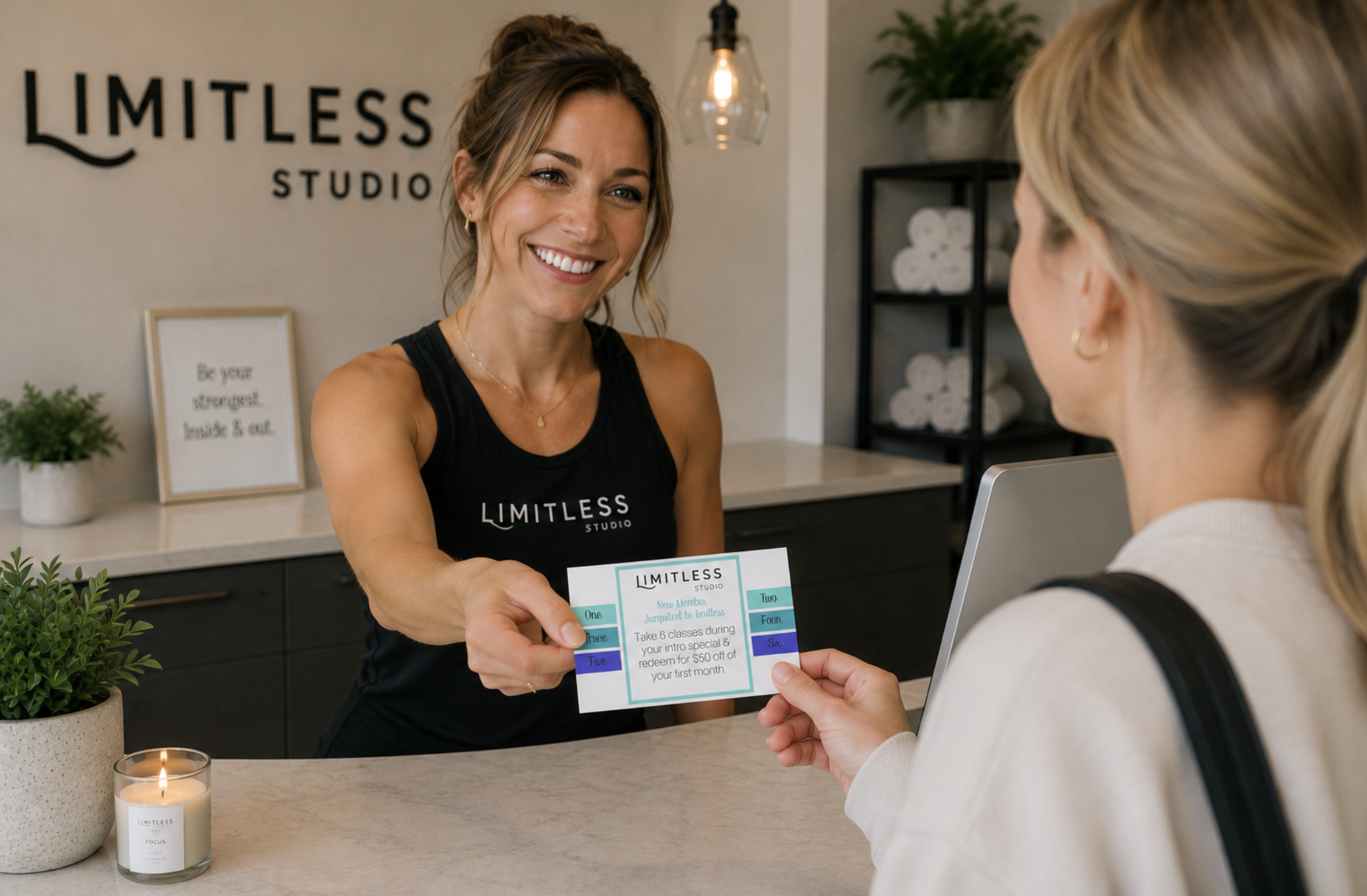
Here's what a digital tracker can't replicate: the card forces a face-to-face moment every single visit. A client can't stamp her own card; she hands it to your staff, someone marks it, and hands it back, which means six visits equal six real conversations instead of six silent app check-ins. I've written before about the rule of seven and why quality connections are the biggest lever in boutique fitness retention. A brand new client doesn't have seven friends at your studio yet, but she can rack up seven quality touchpoints with your staff fast if the system forces it, and that's exactly what the punch card is doing every time it changes hands.
How to Build Your Own
If your intro offer doesn't have a visible progress tracker, you're leaving conversion on the table. Here's what to build in:
Keep the number small. 4 to 6 classes in 2 weeks is the sweet spot. Long enough to build a real habit, short enough that the finish line stays visible. You can add whatever you want to the card, like a punch for a studio tour (see the templates).
Give an actual head start. Even numbering the cards 1 through 6, rather than leaving them blank, nudges people toward "I'm already on my way" rather than "I have to start from nothing."
Tie the reward to a real decision point. Ours converts straight into $50 off month one, so the card isn't a gimmick. It's the bridge into the sale.
The sandwich shop had it right the whole time. The behavioral scientists just spent 20 years proving why.
Want my punchcard templates? Just click here- they’re free!
FROM ONE STUDIO OWNER TO ANOTHER: MEET NIKI, FOUNDER OF LIMITLESS
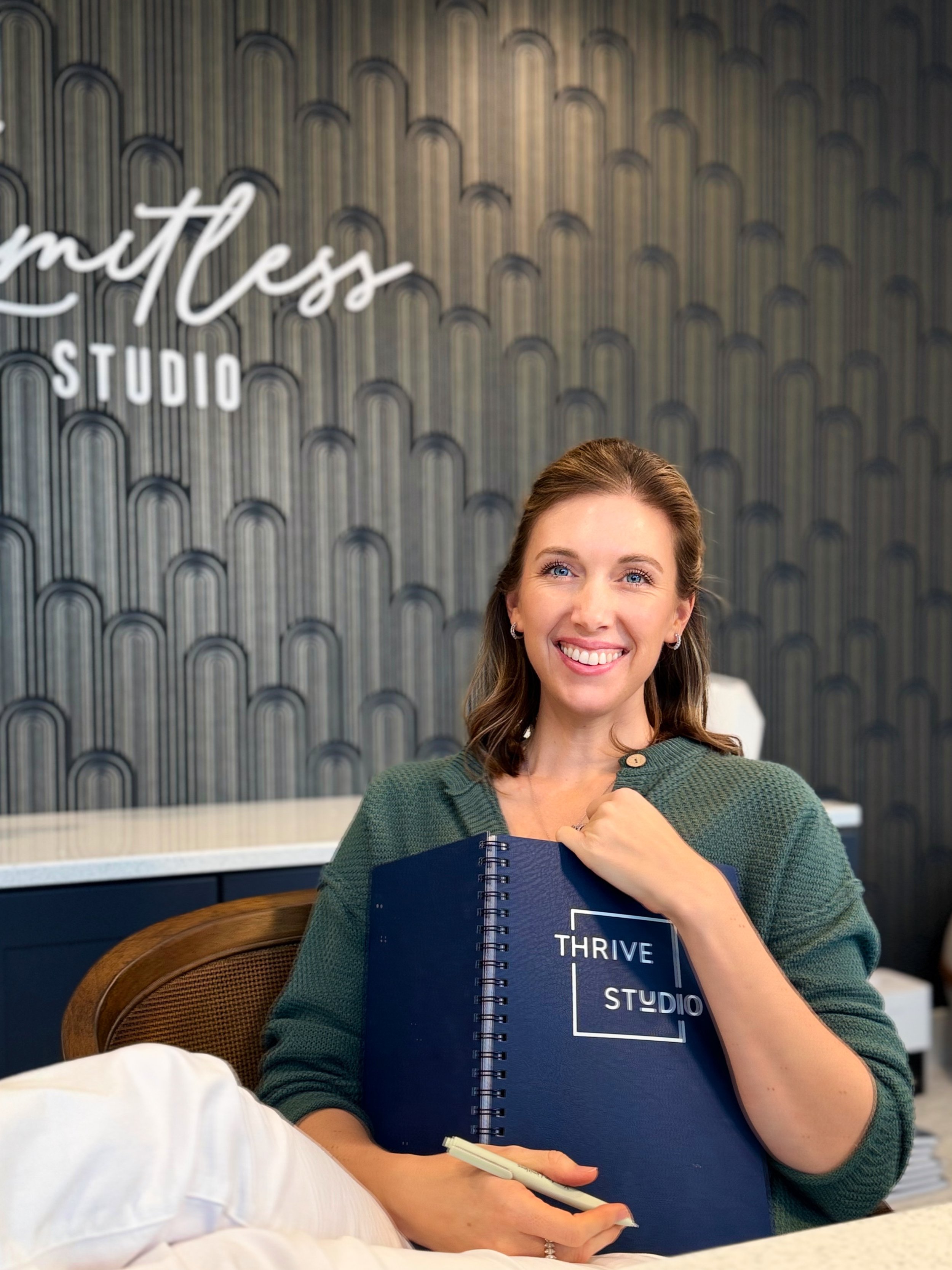
Hi, I'm Niki Riga, founder of Limitless Studio and a business coach specializing in boutique fitness studios. I've spent over a decade in the industry, and now I help you fix the stuff that's quietly costing you money: your intro offers, your pricing, your sales conversations, using actual buyer psychology instead of whatever everyone else in the industry is copying from each other.
I've got a Master's in Small Business, and I've spent years helping studio owners like you build their dream businesses. If you want that kind of strategy in your corner, join the waitlist, and I'll reach out personally when a spot opens up.